How to Choose the Right Steel for Outdoor Projects?
Common outdoor projects include municipal infrastructure, construction site fencing, and container projects. These projects are constantly exposed to harsh environments such as intense sunlight, high humidity, salt spray, and extreme temperature fluctuations. If the wrong materials are selected, issues such as corrosion, deformation, and coating peeling can easily arise, leading to frequent repairs or even structural failure.
In outdoor engineering, the selection of steel directly determines the project’s durability, safety, and overall cost. This article recommends the most suitable steel products for three common types of projects.
Challenges in Selecting Steel for Outdoor Projects
Complexity of the Environment
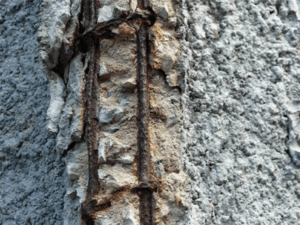
Outdoor engineering is not merely affected by moisture or sunlight; it is subject to the combined effects of UV radiation, salt fog, acid rain, temperature fluctuations, and mechanical vibrations. Under this “environmental fatigue,” the protective layers of ordinary steel or low-grade coated products will age rapidly, allowing microcracks to propagate, ultimately leading to pitting corrosion or structural instability.
Priority Failure at Cut Edges and Welds
Many purchasers focus solely on surface corrosion protection, neglecting the protection of cut edges, punched holes, and welded areas. In these areas, coating damage or residual stress concentration often causes corrosion to appear 2–3 years earlier than on the base material, becoming the “weak link” in the overall service life.
Inadequate Adaptation to Secondary Processing
To reduce costs, some steel products have reduced alloy content or coating adhesion, leading to coating cracking and base material exposure after bending, stamping, or welding. Since this cannot be remedied at overseas construction sites, the material must be scrapped or downgraded for use.
Hidden Risks in Logistics and Warehousing
Overseas projects involve sea and land transport as well as open-air storage. If steel packaging fails to account for moisture, salt fog, and mechanical scratches, hidden rust or coating wear may develop before the material even reaches the construction site. Once installed, these issues quickly become apparent, making it difficult to determine liability.
-
-
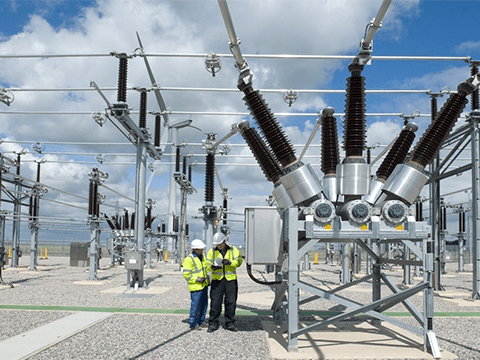
Outdoor Grid
-
-
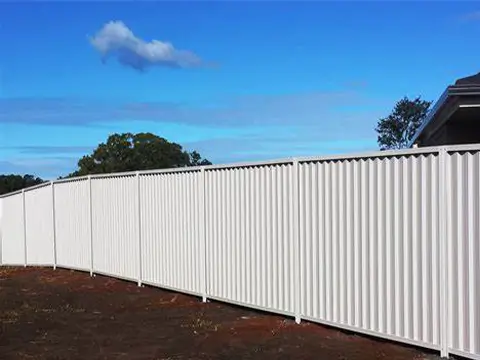
Outdoor patio fence, garden fence
Recommended Steel Grades for Three Major Outdoor Engineering Scenarios
I. Recommended Steel for Container Projects
Container projects include standard containers, modular container housing, and similar applications.
Project Characteristics
Long-term exposure to mechanical impacts such as hoisting, stacking, and transportation vibrations; high-salt-fog environments in coastal ports and shipping routes; potential for varying cargo loads and fluctuations in temperature and humidity.
Recommended Steel Materials
- Zinc coating thickness typically ranges from 180–275 g/m² (double-sided). The iron-zinc alloy layer provides metallurgical bonding, offering strong resistance to mechanical delamination and making it suitable for repeated lifting and stacking.
- It offers a balanced cost-performance ratio and is suitable for standard containers and container components (corner fittings, sills, etc.) in inland and near-coastal areas without extreme corrosion.
Galvalume steel (e.g., 55% Al-Zn) combines the chemical passivation of aluminum with the cathodic protection of zinc. It exhibits low corrosion migration at cut edges and offers a service life 1.5 to 2 times longer than standard galvanized steel in coastal salt fog environments.
- The coating contains zinc, aluminum, and magnesium, forming a dense and self-healing basic carbonate protective film. Corrosion resistance at cut edges and scratches is 3–5 times that of standard galvanized steel.
- This effectively resolves early rusting issues in container bottom crossbeams, bent edges of door frames, and edges of lock rod holes, extending the maintenance interval for the entire container lifecycle by more than double.
-
-
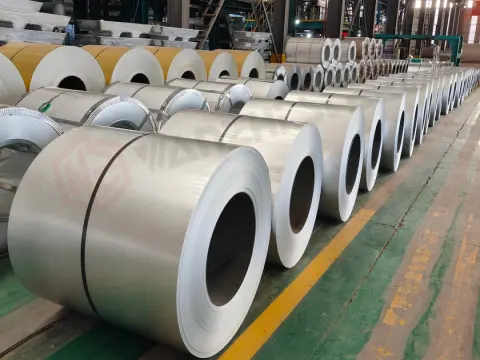
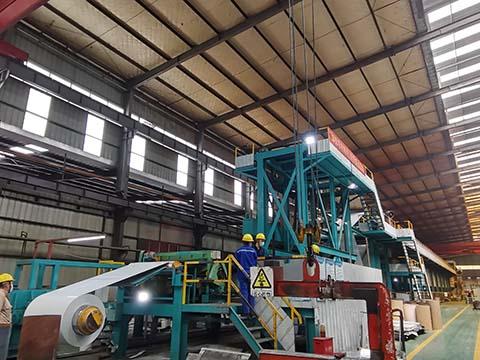
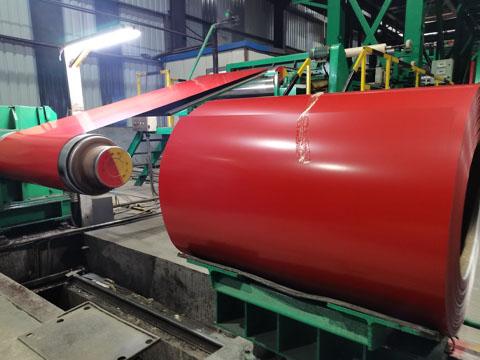
PPGI coil production completed
-
-
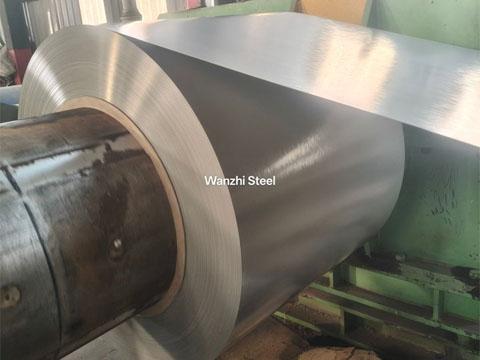
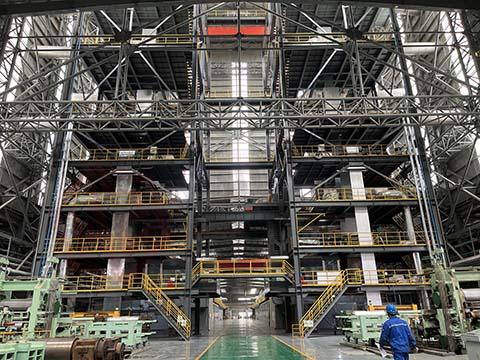
Galvalume dima steel factory
-
-
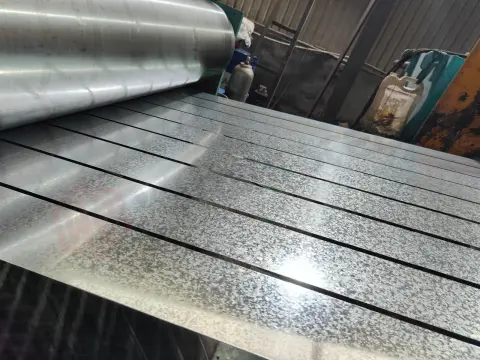
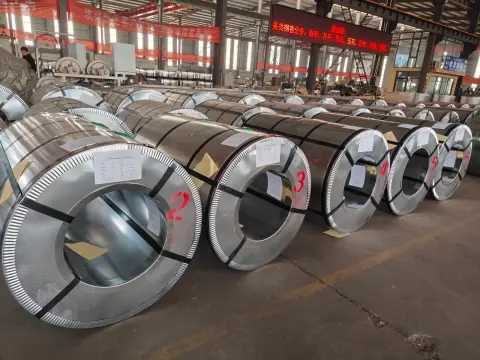
Zinc-coated Dima Steel strip
-
-
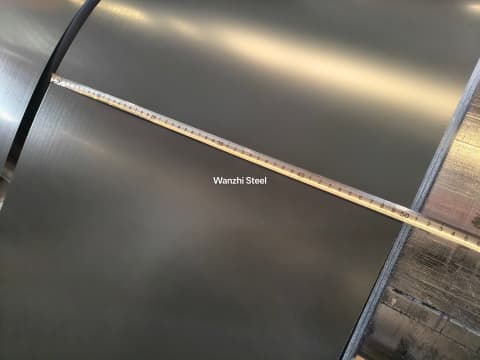
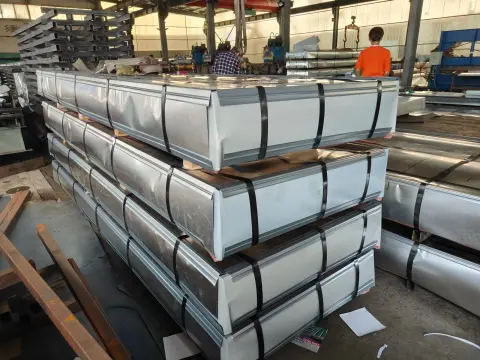
Steel strip width measurement
II. Recommended Steel Materials for Construction Site Fencing Projects
Construction site fencing projects include construction enclosures, municipal barriers, temporary guardrails, and similar applications.
Project Characteristics
Designed for temporary or semi-permanent outdoor use, requiring rapid installation and dismantling; frequently exposed to wind, sand, dust, and airflow from nearby vehicles; surface colors and markings must remain highly visible; some projects require materials to be reusable after dismantling.
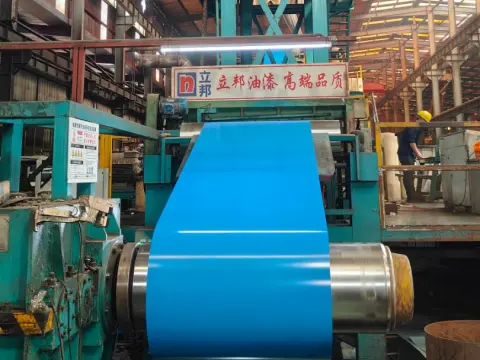
Recommended Steel Materials
- The substrate is hot-dip galvanized, with a topcoat of polyester (PE) or silicone-modified polyester (SMP); the paint film’s hardness and adhesion outperform standard residential color-coated sheets.
- Suitable for barriers intended for frequent reuse or recycling after a single use; costs are manageable, and colors can be customized to project-specific warning hues.
Color-Coated Zinc-Aluminum-Magnesium Sheets
- The substrate is zinc-aluminum-magnesium; cut edges and mounting holes require no additional anti-corrosion treatment. For the topcoat, high-weatherability polyester (HDP) or fluorocarbon (PVDF) is recommended, offering 2–3 times better gloss and color retention.
- Even with minor scratches to the surface coating, the substrate’s galvanized layer prevents rust from spreading, meeting the requirements for repeated disassembly and reuse over 3 years or more, thereby reducing recurring procurement costs.
-
-
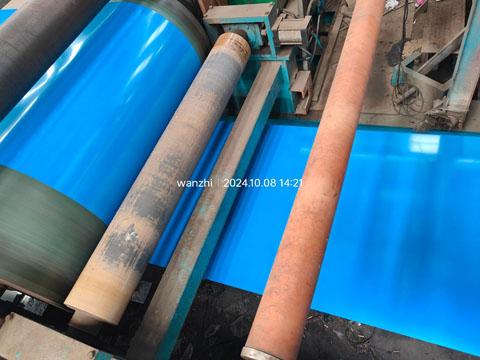
Wanzhi factory color coating line 2
-
-
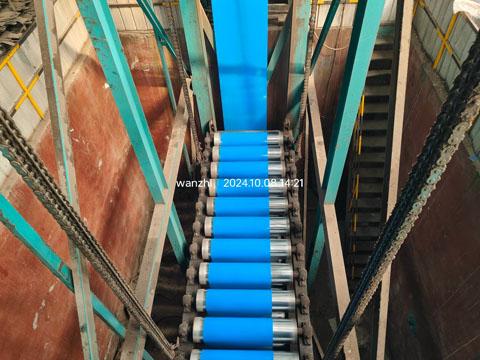
Curing of paint
-
-
Continuous roller coating paint
-
-
Laminated brushed textured film metal roll
III. Recommended Steel Grades for Municipal Infrastructure Projects
Municipal infrastructure projects include road guardrails, outdoor steel structures, bus shelters, and signposts.
Operating Conditions
Design life typically ranges from 10 to 30 years; exposure to urban or rural environments, including de-icing salts (inland), acid rain, and chloride ions in some coastal areas; involves secondary processing such as bending, welding, and bolted connections.
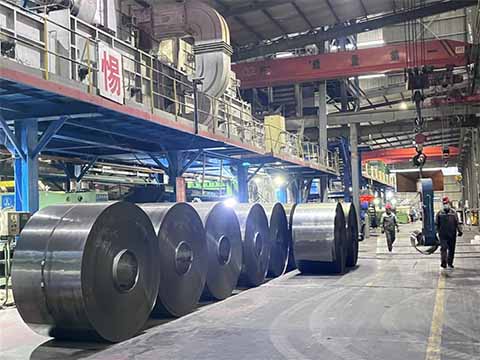
Recommended Steel Materials
Inland Municipal Projects
- Hot-dip galvanized steel sheets with high zinc coating + passivation and sealing, with a total zinc coating of ≥80 g/m² on both sides, supplemented by a chromium-free passivation layer to seal micro-pores in the zinc coating and delay the formation of white rust.
- Suitable for corrugated road guardrails, traffic sign posts, streetlight poles, etc. Use mechanical interlocking or specialized anti-loosening bolts to prevent processing damage to the coating.
Coastal/Acid Rain Zone Municipal
- Zinc-Aluminum-Magnesium Weathering Steel: The coating uses a composition of Zn-6%Al-3%Mg or similar. Its self-healing properties provide far superior protection for drilled and bent areas compared to traditional galvanized steel.
- This can be further combined with the concept of weathering steel (such as Corten steel), where the surface forms a stable rust layer that stops progressing. Suitable for landscape bridges, coastal guardrails, etc., eliminating the need for repeated painting.
- For irregular cross-sections (C-shaped, Z-shaped, U-shaped, Ω-shaped, etc.), hot-rolled or cold-rolled steel strips cut to length are used, with residual stress and coating uniformity controlled in advance.
- Services include flattening, slitting, pre-punching, and pre-bending, reducing on-site cutting and welding while preserving the integrity of the coating protection.
-
-
Hot Dip Galvanizing Factory
-
-
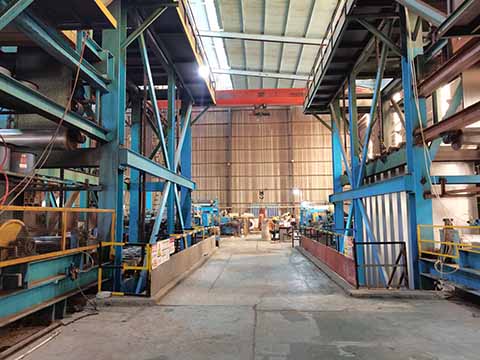
Wanzhi Factory
-
-
Wanzhi Factory Coating Line
-
-
Galvanized Steel Factory
Four-Step Selection Method
Determine the Corrosion Environment Class
Reference ISO 9223 standards to classify the project site as C2 (low corrosion), C3 (moderate), C4 (high), or C5 (very high). Coastal salt fog areas are typically ≥C4.
Confirm Machining Methods
Does the project involve extensive cutting, punching, or welding? If so, prioritize zinc-aluminum-magnesium alloys with “self-healing” properties at cut edges, or require a supplementary cold-galvanized coating after pre-machining.
Calculate Total Life Cycle Cost
Do not focus solely on the price per ton; instead, calculate “purchase price + shipping protection costs + estimated rework rate × cost per rework.” Although the unit price of zinc-aluminum-magnesium sheets is 10–15% higher, their service life is extended by over 50%, often making them a more cost-effective choice.
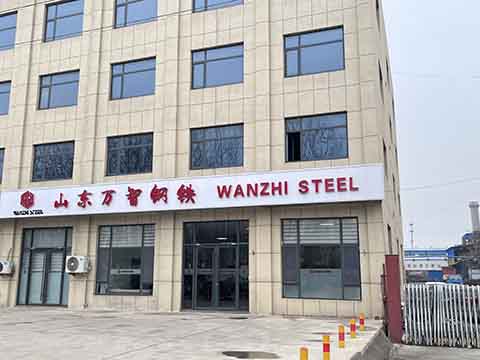
Verify Supplier Capabilities
Request factory test reports (MTC), business licenses, ISO certificates, etc. If possible, conduct on-site factory visits or virtual factory tours.
-
-
Wanzhi Factory
-
-
Wanzhi Steel Factory
-
-
External Packaging of SS sheet
-
-
Wanzhi Factory
Our Core Advantages
- Quality Assurance: We operate our own testing center with rigorous inspection procedures and can meet client requirements for third-party testing, such as SGS certification.
- Integrity-Driven Enterprise: We have obtained multiple certifications, including ISO 9001, ISO 45001, and “Integrity Supplier” status, and adhere to a business philosophy centered on integrity.
- Ocean-Grade Packaging: We use “VCI anti-corrosion film + moisture-proof pallets + steel strapping in a crisscross pattern” to ensure the integrity of products during long-distance ocean transport.
Wanzhi Steel is a company with over 15 years of history, featuring a comprehensive supply chain and a diverse product range that includes pre-painted steel coils, galvanized steel coils, and GL steel coils. If you have any needs, please feel free to contact us at any time.
Related Coil Sheets
ZAM Steel is a high performance anti-corrosion steel, composed of Zn, Al and Mg alloy coating, typical ratio: Zn 90-95%,…
Read More
Galvanized steel is an indispensable anti-corrosion material in modern industry. It can be divided into many types according to production…
Read More
Stainless steel is the most common metal, and galvanized steel is no less common than it. So, as they are…
Read More
We can place galvanized steel and copper together under normal circumstances, but galvanic corrosion may occur under certain conditions (such…
Read More
Not all metals contain iron, but they can rust or tarnish in other oxidizing reactions. To prevent oxidation and breakdown of metal…
Read More
Why Choose Corrugated Roof Sheets? With so many materials on the market, why are Corrugated roof sheets so popular? Because…
Read More